< img height="1" width="1" style="display:none" src="https://www.facebook.com/tr?id=1661970301569062&ev=PageView&noscript=1" />
Phone: +86-19552784307     Email: simon@cnbcsd.com
  • English
  • Русский
  • Español
  • Português
  • Français
  • Deutsch
  • العربية
    Get a Quote

Dry type transformer/

SC(B)12-14-18 Epoxy Resin Cast Dry-Type Transformer

  • Product Details
  • FAQs
  • Packing & Delivery

Overview

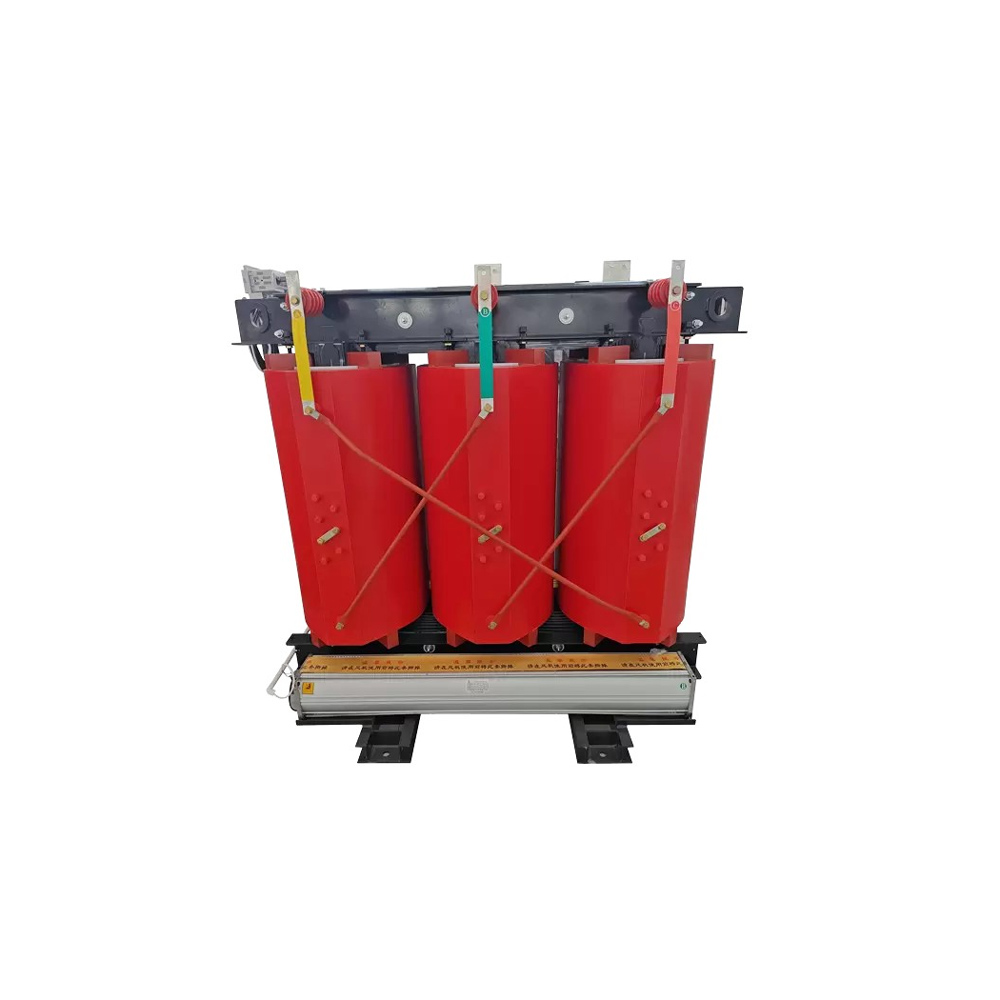
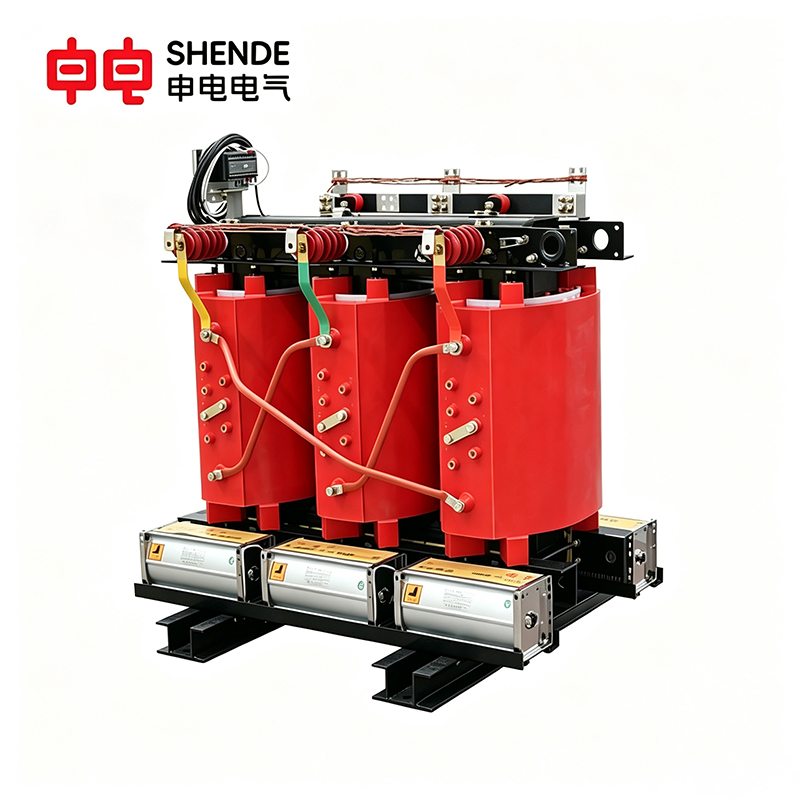
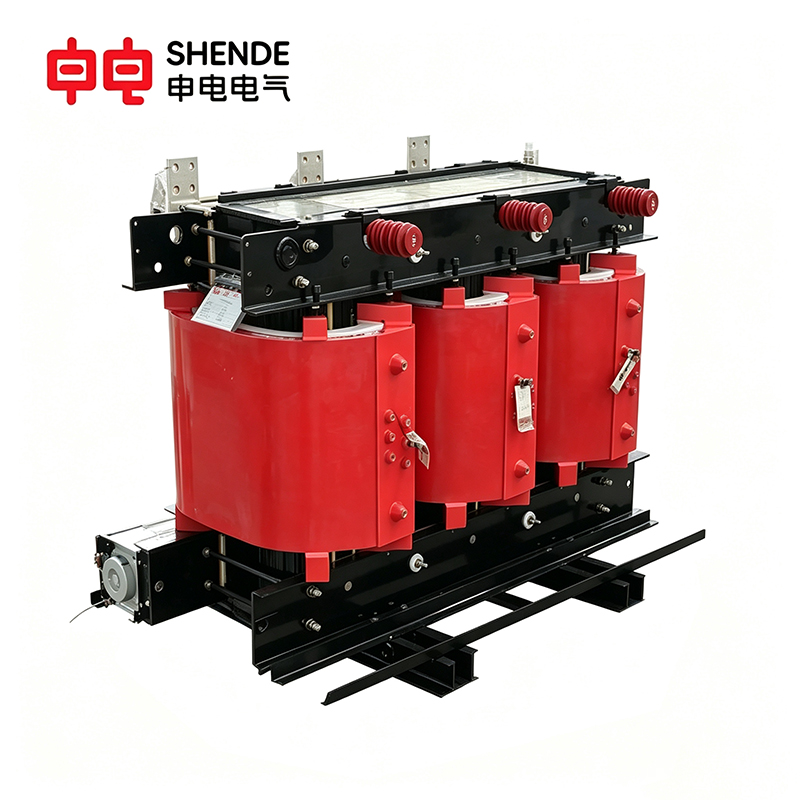
Epoxy resin-cast dry-type transformers can be manufactured with conventional, standard enclosed busbar, and side-outlet options to suit various interface configurations. Special design options can also be customized to meet customer requirements.

The coils are wound on a high-precision winding machine. Glass fiber is applied to the inner and outer layers of the coils during winding. Ventilation ducts are designed for larger transformers. After winding, the coils are vacuum-dried. The entire casting and curing process is completed according to process curves transmitted from the process department to the casting control terminal via a computer network. All processes can be monitored at the computer terminal and automatically adjusted accordingly. The precise manufacturing process ensures that the coils are free of bubbles and voids.

The main components include spacers, cooling ducts, high-voltage coils, low-voltage coils, core, lifting rings, temperature control, high-voltage copper busbars, upper yoke, high-voltage insulators, high-voltage connecting rods, high-voltage taps, high-voltage connecting plates, fans, and a base.

Product Specifications

High Dielectric Strength

Pouring epoxy resin has an insulation breakdown field strength of 18-22 kV/mm and offers roughly the same lightning impulse strength as oil-immersed transformers of the same voltage level. It also has an insulation temperature rating of F, a maximum allowable temperature of 155°C, and a winding temperature rise limit of 100 kV.

Strong Short-Circuit Resistance

Due to the resin’s material properties and the fact that the windings are integrally cast and then heat-cured to form a steel body, the resulting structure offers exceptional mechanical strength. Sudden short-circuit tests have shown that cast dry-type transformers rarely experience damage from short circuits.

Excellent Environmental Performance

Epoxy resin is a chemically extremely stable material, resistant to moisture and dust. It operates reliably even in polluted environments, even at 100% humidity. It can be put back into operation after an outage without requiring drying or preheating.

Maintenance-Free

Thanks to a comprehensive temperature control and display system, epoxy-cast dry-type transformers are now maintenance-free, significantly reducing the burden on operators and lowering operating costs. They offer low operating losses, high efficiency, low noise levels, and are compact, lightweight, and easy to install and commission. They eliminate the need for a separate transformer room and core inspection, saving floor space and correspondingly reducing construction investment.

Strong Overload Capacity

The SC(B)10-12 series can withstand a long-term overload of 1.16 times the rated load at an ambient temperature of 20°C, and a 1.5 times overload for up to 60 minutes. If a fan is used to operate the transformer in forced air cooling (AF), it can withstand a short-term overload of 1.5 times the rated load. [Note: The overload capacities of the transformer’s high and low voltage inlet and outlet switches and busbars must match.]

Outstanding Disaster Prevention

Epoxy resin is flame-retardant, self-extinguishing, and non-flammable, preventing secondary hazards such as explosions.

Main technical parameters

Rated voltage: The voltage between the transformer’s high-voltage input and low-voltage output (35kV/0.4; 20kV/0.4; 10kV/0.4).

Rated frequency: my country’s power grid frequency is 50Hz; overseas, it’s 60Hz.

Short-circuit impedance: A basic parameter for voltage transformation (normally 4% or 6%).

No-load loss (Po): The loss generated when the transformer operates without load. This loss occurs in the transformer core and is sometimes referred to as iron loss. The transformer’s no-load loss is not directly related to temperature; it remains constant at all temperatures.

Load loss (Pk): The loss generated in the windings when the transformer is operating at rated load. This also includes losses in the structural components caused by leakage magnetic fields. This loss occurs primarily in the copper conductors of the windings and is therefore also referred to as copper loss. The transformer’s load loss varies with temperature because the conductor’s resistance changes with temperature. Therefore, the loads of different transformers must be converted to the same temperature. The reference temperature for oil-immersed transformers is 80°C, for Class F dry-type transformers it is 120°C, and for Class H dry-type transformers it is 145°C.

Insulation level: The electrical strength a transformer must withstand, primarily including lightning strike resistance and power frequency withstand voltage.
Q1: What does SC(B)12 / SC(B)14 / SC(B)18 mean in the series name?

All three are epoxy resin-cast dry-type transformers (S = three-phase, C = cast resin, B = foil-wound low-voltage coil). The number is the energy-efficiency level under GB 20052-2020: SCB12 = Grade 3 (economy), SCB14 = Grade 2 (mainstream), SCB18 = Grade 1 (highest, lowest no-load loss). The “(B)” covers the amorphous-core option (SCBH) for even lower no-load loss. All share the same casting process and structure — only the core steel and loss targets differ.

Q2: Which model should I choose — SCB12, SCB14, or SCB18?

Pick SCB12 for budget-driven projects with short or medium duty (secondary distribution, residential, light industry). Pick SCB14 as the default for most commercial and industrial works — Grade 2 passes nearly all tenders and the extra cost pays back in 2-3 years. Pick SCB18 only for 24/7 high-tariff loads (data centers, continuous process plants), where its ~15-20% lower no-load loss versus SCB14 recovers the premium fastest.

Q3: How do you ensure the epoxy coil has no bubbles or voids?

Coils are wound on a high-precision machine with glass fiber applied on inner and outer layers and internal cooling ducts for larger units, then vacuum-dried before casting. The resin is poured and cured following process curves transmitted digitally to the casting control terminal, where every step is monitored and auto-adjusted. This removes trapped air and voids — the main cause of partial discharge and insulation aging in poorly cast transformers.

Q4: What is the dielectric strength of the epoxy insulation, and is it as good as oil?

The casting resin has a breakdown field strength of 18-22 kV/mm and provides lightning impulse strength comparable to an oil-immersed transformer of the same voltage. Insulation class F (max 155°C), temperature-rise limit 100 K. For indoor, fire-sensitive sites the dielectric margin is more than sufficient — that is why cast-resin units are standard in buildings, data centers, and underground substations.

Q5: Can the transformer run in humid or dusty environments?

Yes. Epoxy resin is chemically stable and resists moisture and dust even at 100% humidity. After a power outage it can be re-energized directly — no drying or preheating is required, unlike oil units that may need oil tests. This makes it a strong fit for coastal, tropical (e.g., Malaysia, Indonesia), and mildly polluted industrial sites.

Q6: Why is the short-circuit strength higher than normal transformers?

Because the high- and low-voltage windings are integrally cast and heat-cured into one solid body, the resin acts as a rigid mechanical shell that resists the enormous electrodynamic forces of a short circuit. Sudden short-circuit tests show cast-resin units rarely sustain winding deformation — a key reason utilities and industrial plants accept them for 35 kV and below distribution.

Q7: What overload capability does the series offer?

At 20°C ambient, it can run 1.16× rated load continuously and 1.5× for up to 60 minutes. With optional fans in forced-air (AF) cooling, short-term overload of 1.5× is achievable. Note: the upstream/downstream switches and busbars must be rated for the same overload, and AF requires a control power supply.

Q8: How safe is it in a fire?

The epoxy is flame-retardant, self-extinguishing, and non-flammable. In a fault or external fire it does not propagate flame or explode, and it releases no oil to feed the fire — no secondary hazards, unlike oil-immersed transformers which require fire walls, oil pits, and separation distances. Cast-resin dry-type units can be installed inside buildings and near occupied areas.

Q9: What voltage ratings are available — can you do 20 kV and 35 kV?

Standard combinations are 10/0.4 kV, 20/0.4 kV, and 35/0.4 kV, 50 Hz as standard and 60 Hz for overseas projects. 35 kV-class cast-resin units (designed per IEC 60076-11 / GB/T 10228) are our differentiator for grid and industrial substations. Short-circuit impedance is normally 4% or 6%, and higher levels are available on request.

Q10: What tests and documentation come with each unit?

Every unit ships with a routine test report (ratio, DC resistance, insulation, AC withstand, partial discharge, no-load/load loss at the class reference temperature — 120°C for Class F, noise, temperature-rise). For tenders requiring a witnessed type test (KEMA, CEPRI, TÜV, DEKRA) or factory audit, please specify in the PO — typical lead time 4-6 weeks. We also provide GA drawings and FAT invitations for all export orders.

Previous:

Next:

Leave a message

No:94223