 Jiangsu Shendian Electric Co., Ltd.
 Serial Number name say Technical Specifications
one Basic technical parameters of transformer
1 Energy efficiency rating SCB12
2 Rated capacity (kVA) 800
3 Rated voltage (kV) High voltage / Low voltage 10 / 0.4
4 Rated current (A) High voltage / Low voltage 46.19 / 1154.7
5 Open-circuit voltage ratio (kV) 10 ± 2*2.5 %/ 0.4
6 Short-circuit impedance (%) U High – Low 6
7 Linkage group label D ,yn11
8 Rated frequency ( Hz ) 50
9 Insulation class F-class
10 Temperature rise limit 100K
11 Rated insulation level 35/5
High voltage side Peak withstand voltage of lightning impulse (kV) 75
Short-time power frequency withstand voltage RMS value (kV) 3 5/60S
Low-pressure side Short-time power frequency withstand voltage RMS value (kV) 5 /60S
Neutral point side Short-time power frequency withstand voltage RMS value (kV) 5 /60S
12 loss No-load loss (kW) 1.215
Load loss (kW) 6.96
13 No-load current (%) 0.70
1 4 efficiency (%) ≥99%
1 5 Partial discharge quantity ( PC ) <10
1 6 Noise level ( dB ) ≤6 0
two Terminal blocks
1 Terminal allowable load /
2 Longitudinal ( N ) /
3 Horizontal ( N ) /
4 Vertical tension ( N ) /

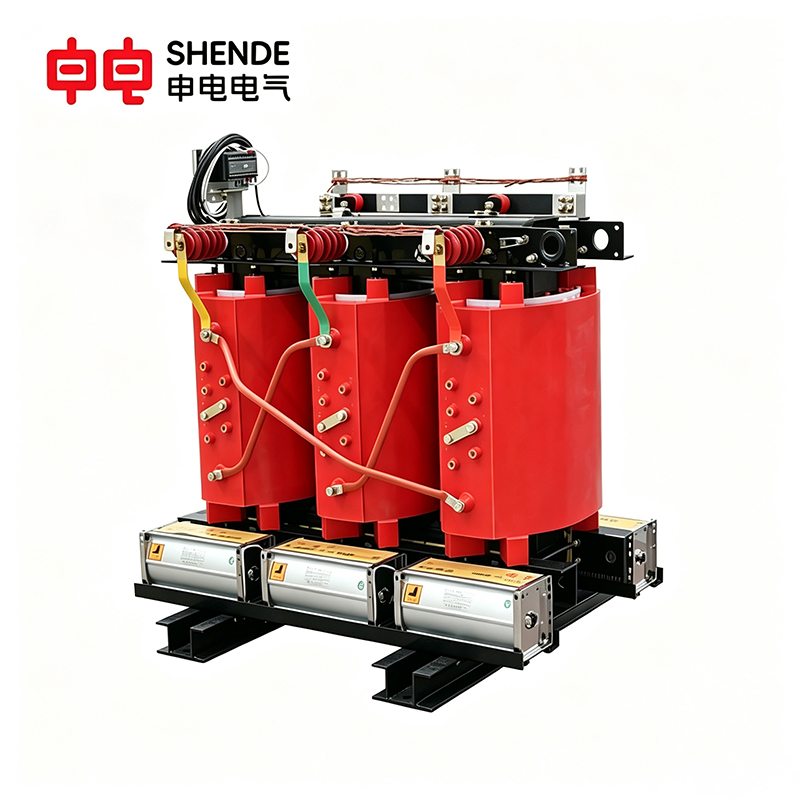
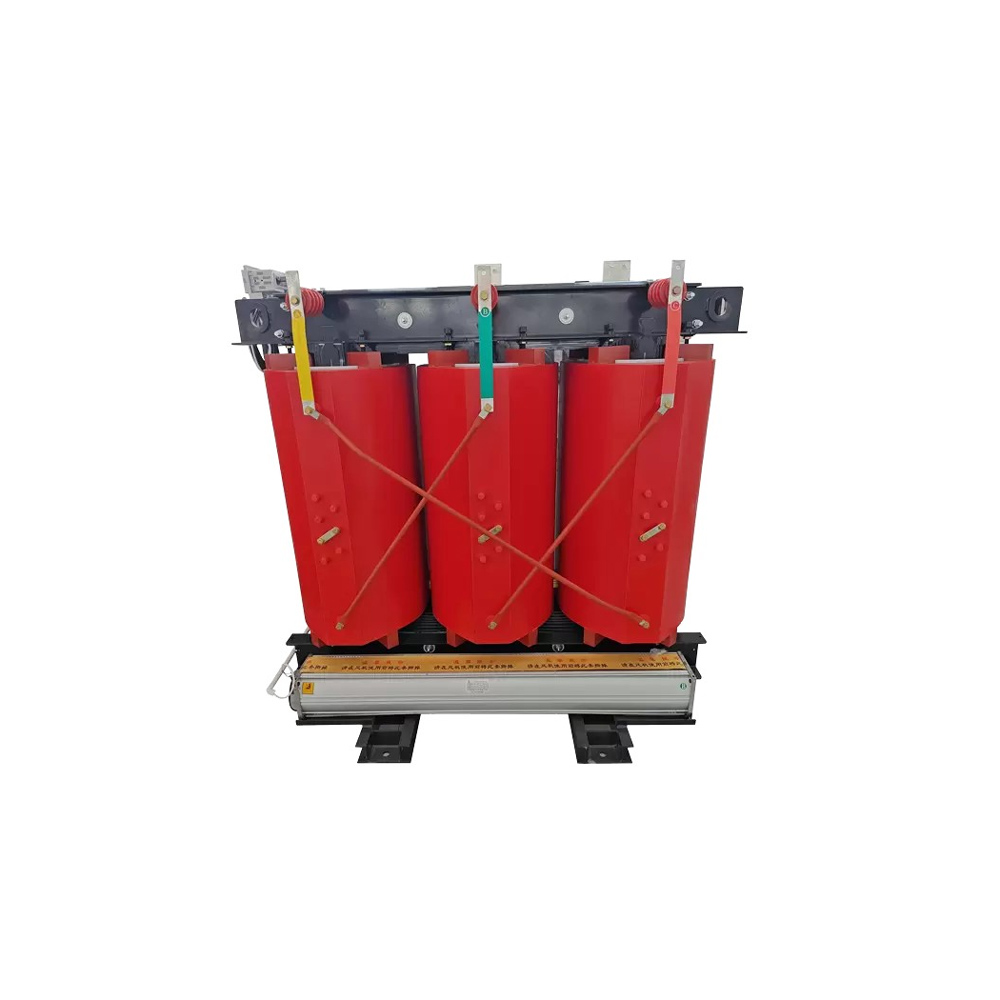
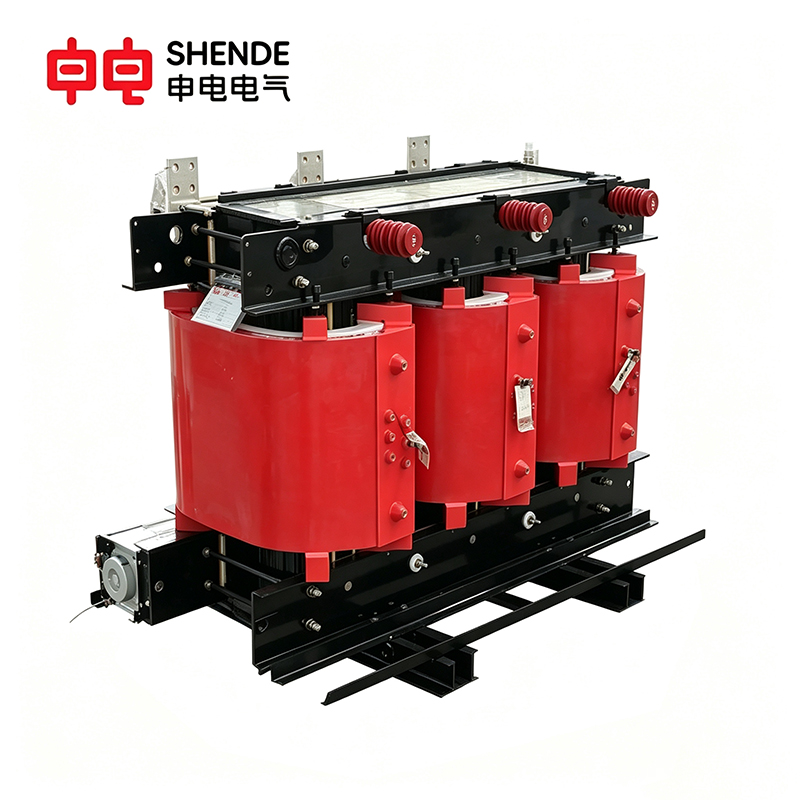
Shendian Electric SCB12-800 Series Three-Phase Dry Type Transformers
- Product Details
- FAQs
- Packing & Delivery
Q1: What are the key specifications of the SCB12-800/10?
Three-phase cast-resin dry-type distribution transformer, 800 kVA, primary 10 kV (±2×2.5% tap), secondary 0.4 kV, vector group Dyn11, 50 Hz, F-class insulation, 100 K temperature rise. No-load loss 1.215 kW, load loss 6.96 kW (at 75°C), short-circuit impedance 6%, efficiency ≥99%, noise ≤60 dB(A), partial discharge <10 pC. Designed and tested per GB/T 1094.11, manufactured under ISO 9001.
Q2: What energy-efficiency grade is SCB12 under GB 20052-2020?
SCB12 is Grade 3 energy efficiency (the baseline level for silicon-steel dry-type transformers) under GB 20052-2020. It is the new national standard’s entry-level tier, equivalent to the old SCB10/S10 family. Compared to SCB14 (Grade 2) and SCB18 (Grade 1), it has about 15-20% higher no-load loss but costs 10-20% less — making it ideal for projects where initial budget matters more than long-term energy savings.
Q3: When is SCB12 the right choice vs SCB14 or SCB18?
Pick SCB12 when: ① budget is the priority (e.g., residential, small commercial, secondary distribution); ② load factor is below 60% or operating hours are short; ③ local regulations only require Grade 3 minimum. Pick SCB14 when the project wants Grade 2 and a quick 2-3 year payback. Pick SCB18 only for 24h high-tariff operations (data centers, continuous-process plants) where the 15-20% extra cost is recovered through energy savings.
Q4: What are the typical dimensions and weight of the SCB12-800?
Reference values: approx. 1450 (L) × 1150 (W) × 1600 (H) mm, weight ≈2700-2900 kg (bare) / up to 3200 kg (with IP20 enclosure). Final dimensions and foundation drawing come with our GA. Floor load capacity should be ≥500 kg/m²; reserve crane access or forklift route for placement.
Q5: Why use Dyn11 vector group for 10/0.4 kV distribution?
Dyn11 = Delta primary, Wye secondary with neutral, secondary lags primary by 30°. Three real benefits: ① blocks 3rd harmonic transfer; ② the neutral handles unbalanced single-phase loads; ③ strong against inrush from rectifiers, VFDs, and UPS. This is the GB-recommended standard connection for 10/0.4 kV distribution and matches most local DSO requirements.
Q6: What does the 6% short-circuit impedance mean?
6% is the standard GB/T 10228 value. It determines the short-circuit current level (about 60 kA on the 0.4 kV side at 800 kVA) and voltage regulation (about 4% at full load). For parallel operation, the impedance deviation between units must be within 10%, and units must share the same ratio, vector group, and capacity ratio ≤1:3. For single-unit use, just apply this value directly.
Q7: Can this F-class / 100K transformer run at full load continuously?
Yes. F-class insulation withstands 155°C; 100 K rise limit (ambient 40°C → winding top 140°C) is the standard GB design for continuous full-load operation. Designed service life is 25-30 years. For short-term overload (110% for 1h, 120% briefly), add forced air cooling (AF) to gain 30-40% extra capacity — recommended for sites expecting future load growth.
Q8: Does the ≤60 dB noise level meet typical indoor installation requirements?
Yes. 60 dB(A) at 1 m meets the GB/T 1094.10 standard for 800 kVA dry-type and is well accepted in factories, basements, and dedicated transformer rooms. For office, hotel, or hospital-adjacent installations, add anti-vibration pads (-5 dB) or IP20/IP23 enclosure (-3-5 dB) to bring running noise down to ≈53-55 dB.
Q9: How does the <10 pC partial discharge level affect reliability?
<10 pC is the qualified grade per GB/T 1094.11 (≤5 pC is premium, ≤10 pC is qualified). It is fine for general commercial and industrial applications. If your project is in a critical site (nuclear, semiconductor cleanroom) requiring ≤5 pC, please specify “PD ≤5 pC” in the PO — we can adjust the casting process and add vacuum impregnation to meet the premium level.
Q10: What tests and certifications are included, and what should we check on delivery?
Every unit ships with a routine test report (ratio, DC resistance, insulation, AC withstand, induced voltage, no-load/load loss, impedance, noise, partial discharge — 9 items per GB/T 1094.11). On arrival, we recommend re-test of ① insulation resistance and AC withstand (to confirm no transport damage) and ② ratio + vector group (Dyn11 polarity must be correct). If the tender requires a third-party witnessed Type Test (KEMA, CEPRI, TÜV, or DEKRA), please specify in the PO — lead time 4-6 weeks.
WeChat
Scan the QR Code with wechat