 Jiangsu Shendian Electric Co., Ltd.
 Transformers are the load-bearing bones of any power grid. Whether it is a distribution unit on a village feeder, a dry-type transformer in a data center, or a large oil-immersed power transformer, the insulation, dielectric strength, temperature rise, losses, and short-circuit withstand capability decide whether the grid stays up. A single defect can mean an outage, a fire, destroyed equipment, or worse.
Building one is nothing like stamping out bolts. The process is long: raw material in, parts machining, coil winding, core stacking, insulation, final assembly, varnish or oil filling, routine testing, then shipment — and every stage hides its own failure modes. A modern plant needs a quality system that covers the whole life cycle, with clear accountability, full traceability, and standardized work. We run it on five pillars: incoming inspection (IQC), in-process patrol inspection (IPQC), dedicated process checks, full routine testing (FQC), and after-sales closed-loop control — backed by standardized documents, calibrated equipment, trained people, traceability, and continuous improvement. This article walks through how that system is actually built and run.
1.Start With the Foundation: A Standardized Quality Management System
Quality control is not a single inspection step. It is a management system, and the first job is to certify and standardize it so the whole line has something to stand on.
1.1 System certification and document control
We build our quality files against ISO 9001, China’s GB/T 1094 series for power transformers, GB/T 10228 for dry-type units, the energy-efficiency limits, and the short-circuit withstand specifications. The documentation sits in four tiers:
- Level 1, the Quality Manual: quality policy, organization structure, and department-level responsibilities.
- Level 2, Procedure documents: incoming inspection, process control, nonconforming product handling, equipment calibration, traceability, and customer-complaint handling.
- Level 3, Work instructions: process cards for each operation, inspection specifications, equipment SOPs, and test standards.
- Level 4, Records: incoming inspection sheets, patrol logs, test reports, nonconformance reports, and calibration ledgers.
Every drawing, process, and inspection standard is released under control. When a drawing changes, the matching inspection standard changes with it — we do not let old and new specs mix on the same line.
1.2 An independent QA department
SHENDIAN runs a standalone QA/QC department that does not report to production. It splits into IQC (incoming), IPQC (in-process patrol), FQC (final inspection), OQC (outgoing), and QE (quality engineering and improvement). Each group has defined authority, acceptance criteria, and an escalation path. The rule is simple: production executes, quality judges. No operator clears a suspect half-finished unit on their own.
1.3 Metrology and test equipment, full life-cycle control
Testing leans on precision gear — DC resistance testers, turns-ratio testers, HIPOT benches, partial-discharge detectors, temperature-rise systems, loss analyzers, calipers, micrometers, megohmmeters, paint-thickness gauges, and oil-pressure testers. All of it goes into a calibrated-equipment ledger. Each instrument is sent to a third-party lab on schedule and tagged with a valid-calibration label; anything past due is pulled from service. Daily, we run a pre-start no-load check. If readings drift or a fault appears, the machine is stopped and tagged out, and the repair and calibration records are kept so the data stays trustworthy.
1.4 People
Every operator and inspector is certified before they touch the line. New hires get three-tier training: plant-level (policy, safety, accident case studies), workshop-level (local failure modes and what defects actually cost), and post-level (process, inspection points, self-check). Pass the exam, get the badge. Veterans get a monthly quality review built around recent batch defects and customer feedback; inspectors sit a hands-on standards exam every quarter, and anyone who fails is pulled off the line. We tie quality to pay — catch a major defect on self-check and you are rewarded; cause a batch failure or let a bad unit ship and it hits your record. That is how the ‘self-check, mutual-check, special-check’ discipline actually sticks.
2.At the Source: Incoming Material Control (IQC)
Core materials — silicon steel, copper or aluminum conductor, insulation paper, insulating oil, epoxy, core hardware, tank plate, terminals, temperature controllers, fans — can wreck a finished unit if they are wrong. Incoming inspection is the first gate, and the rule is inspect before stock, zero nonconforming material in.
2.1 Full inspection of critical materials
- Silicon steel (the core’s heart): verify grade, thickness, and the supplier’s certificate; sample-test iron loss, magnetic flux density, and coating insulation; check for rust, burrs, lamination, or wave deformation. After shearing, dimensional tolerance and burr height are tightly controlled — excess burr drives up no-load loss and seeds partial discharge.
- Copper or aluminum winding wire: verify purity and cross-section tolerance, measure DC resistance, check the insulation coating for breaks, pinholes, or scratches; sample the flexibility and bend performance. A nick in the coating means an inter-turn short.
- Insulation (paper, spacers, laminates): test thickness, dielectric strength, moisture content, and temperature class. A damp part drops the withstanding voltage and pushes partial discharge over the limit. For oil-filled units, the insulating oil gets breakdown-voltage, moisture, dissipation-factor, and dissolved-gas analysis — bad oil triggers internal discharge and high-temperature carbonization.
- Structural parts: tank-plate flatness, weld quality and dimensional tolerance; coating thickness and corrosion resistance of fasteners; functional power-on test for controllers and fans; verify specification conformance against order drawings to prevent material mismatch.
2.2 Supplier tiering and incoming nonconformance closed loop
We grade suppliers A, B, and C by shipment quality. A-grade gets reduced sampling; C-grade gets 100% inspection. Quarterly scorecards; repeat low scorers get a meeting and a deadline, and if they do not fix it, we cut them. When incoming material fails — wrong size, out-of-spec performance, cosmetic defect — IQC writes a nonconformance report, quarantines the lot, and loops purchasing in to the supplier for return, exchange, or claim. We demand an 8D corrective-action report and track the fix; if the same problem recurs, sampling goes up. All incoming records and certificates are filed, and each lot’s batch, model, and supplier go into the traceability system, so we can trace a finished unit straight back to its raw material.
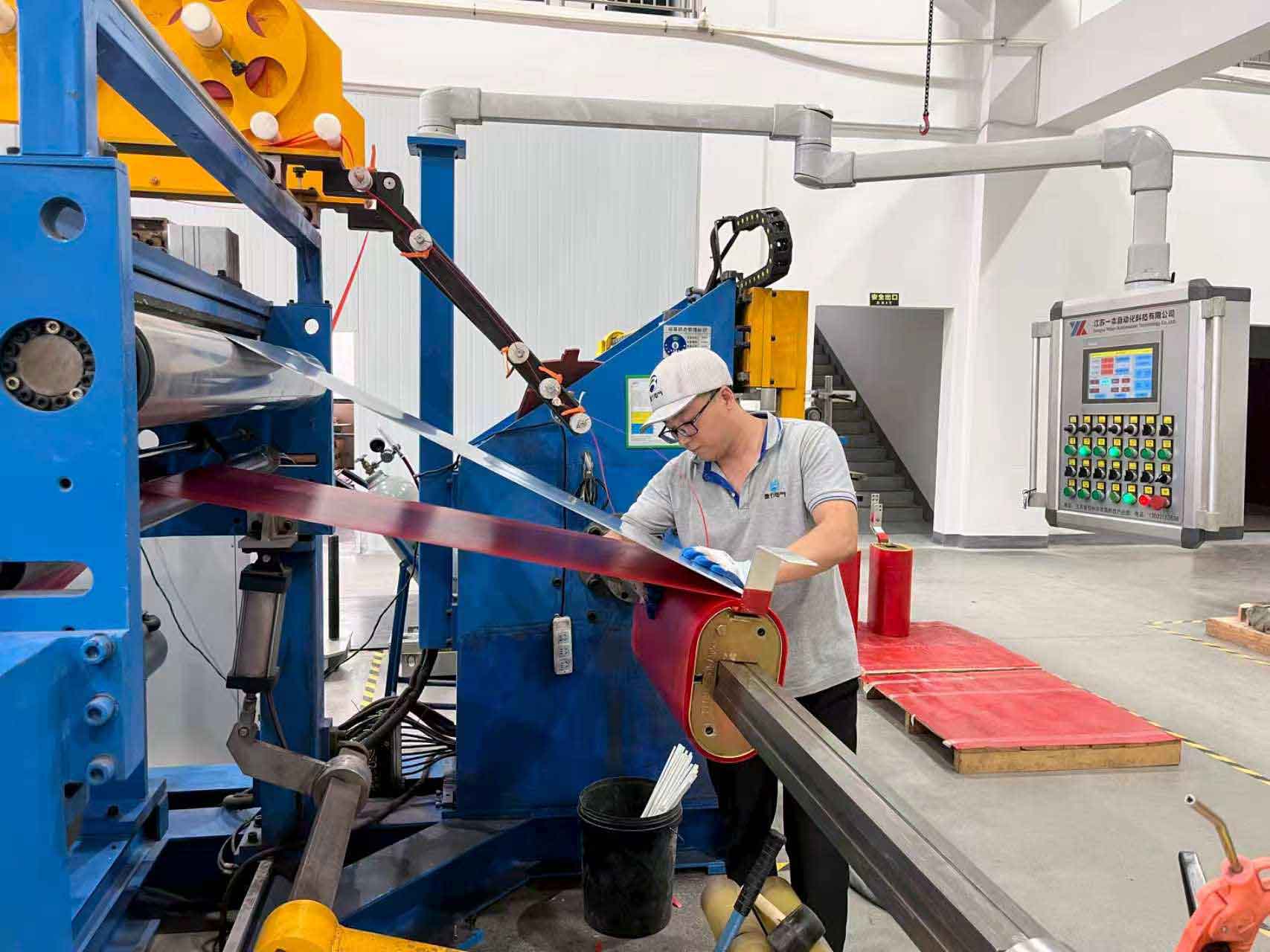
Coil-winding cell on the SHENDIAN production floor.
3. On the Floor: Process Control (IPQC + Dedicated Checks)
Production runs through seven core operations: core processing, coil winding, insulation assembly, core-coil build, drying and varnishing, final assembly, and oil filling or epoxy casting. Every operation carries control points, and we run triple control — operator self-check, adjacent-station mutual check, and the patrol inspector’s fixed-point check. A nonconforming half-finished unit never moves to the next station.
3.1 Core processing
Shearing, stacking, and banding are the key steps. Patrol focus: shear tolerance, end-face burr, stack gap, stack-height evenness, and banding tightness. Too wide a gap raises no-load loss; a burr can cut the winding insulation. IPQC pulls a stack sample every two hours to measure the gap and runs a full first-article dimensional check each day — no first article, no batch. Finished cores get core-loss and no-load-current tested; failures are quarantined and re-stacked.
3.2 Coil winding — the highest-risk operation
Inter-turn short, damaged conductor insulation, and wrong turn count are the most common transformer faults, so winding gets a mandatory first-article check. The first coil off the machine is verified for turn count, wire spec, layer count, and insulation-pad placement, plus inner and outer diameter and height. During the run, patrol watches conductor tension — too tight shreds the coating, too loose leaves a loose coil — and checks inter-layer paper for shift or damage and that splices are flat and burr-free. Every finished coil gets a 100% inter-turn withstand test; a fail means strip and rewind, with the cause logged (wire damage, handling error, paper defect).
3.3 Insulation assembly and core-coil build
When coil meets core, the focus is insulation spacing, spacer placement, lead fixing, and taping. Lead corners must be wrapped in cushioning insulation so a sharp edge cannot puncture and cause partial discharge. Patrol checks spacer position and torque — too tight crushes insulation, too loose rattles. After the build, the active part must be clean: any metal sliver or dust is removed, because a tiny metallic speck under voltage means partial discharge and eventually breakdown.
3.4 Drying, varnish, and epoxy casting
Moisture in insulation is the main cause of withstanding failure, so vacuum drying of oil-unit active parts and epoxy cure of dry-type units are critical. IPQC monitors drying temperature, vacuum, and duration, logging the humidity curve; after drying, insulation resistance is measured and anything short of spec goes back in the oven. Casting controls epoxy ratio, mix time, and cure temperature to avoid cracks and bubbles; after casting we check for porosity, cracks, and short fill, since internal bubbles push partial discharge over the limit. Vacuum oil filling controls vacuum, fill rate, and oil temperature, then settles to bleed trapped air.
3.5 Final assembly
During tank welding, active-part lifting, wiring, sealing, and fan or controller fitting, we check for weld porosity and leaks (oil leaks are a major defect), terminal torque, phase-sequence correctness, and intact gaskets. Oil units get a pressure leak test — tank, flanges, valves — for any seepage. Dry-type units get a check of the cast-body-to-enclosure clearance and fan mounting. Each batch gets a powered trial run to listen for noise and feel for overheating.
Process anomaly handling: a minor defect found on patrol gets an on-the-spot rework with the operator. A batch failure or a major safety risk — say, a run of inter-turn breakdowns or widespread moisture — triggers a line-stop notice; production halts, a quality engineer joins process and production to find the root cause, and a corrective and preventive action is verified before restart. Every stop and fix is archived.
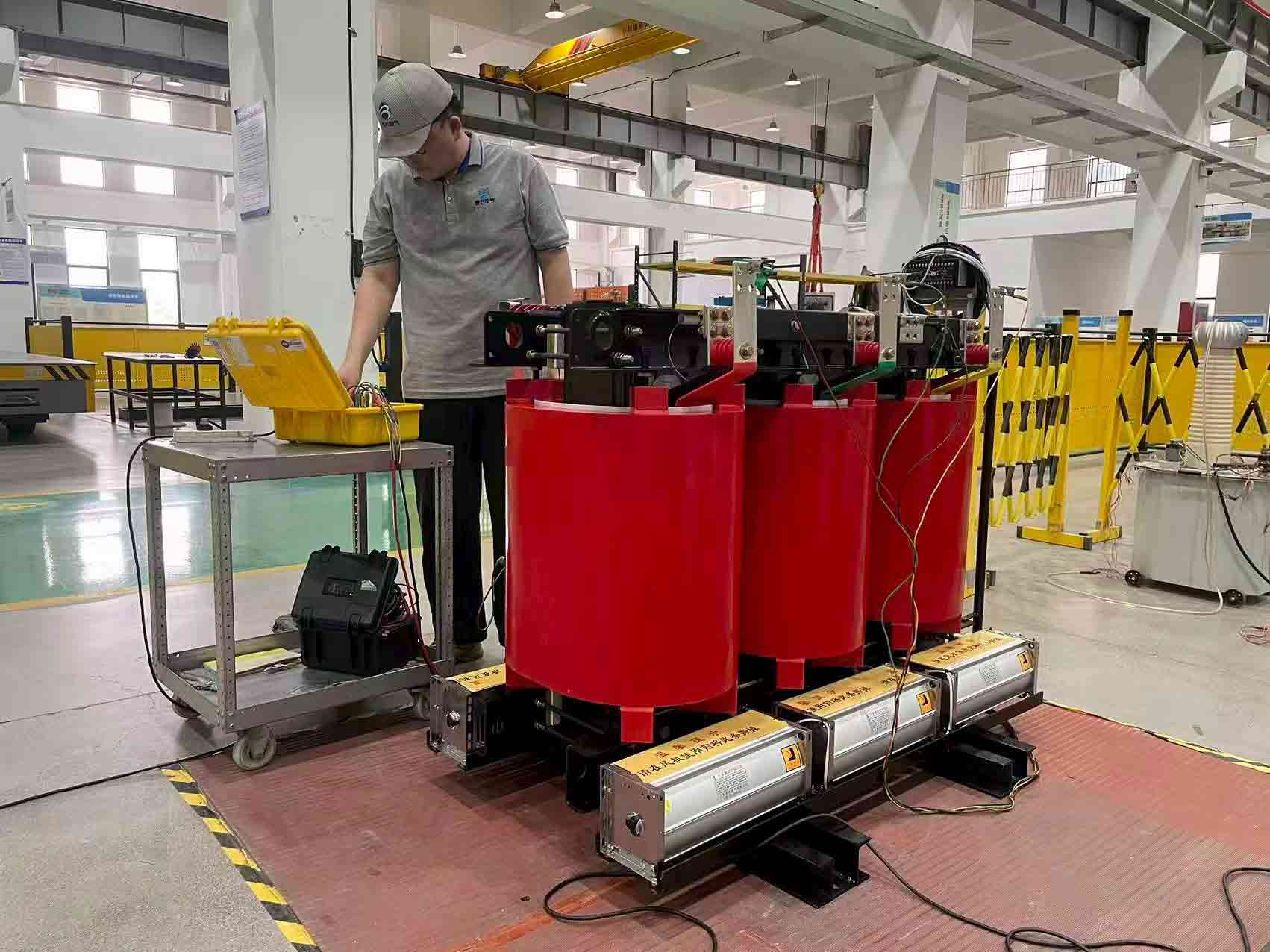
Routine testing and type-test verification in the SHENDIAN laboratory.
4. At the Gate: Final QC (FQC Routine Tests) + OQC Pre-Shipment
Once a unit reaches final, FQC runs 100% routine tests against the national standard and the customer’s technical agreement; batch products get type tests by sampling. Nothing ships without every test passed.
4.1 Routine tests every unit must clear
Each transformer gets: DC resistance (open circuit, loose joint), turns ratio and vector group (wrong turns, wrong wiring), insulation resistance, power-frequency withstand, induced withstand (inter-turn), no-load loss and current, load loss, leak test (oil), appearance and dimension check, and nameplate verification. Dry-type units add a partial-discharge test and temperature-rise sampling; large power transformers add lightning impulse and short-circuit withstand. All data goes into the system live; an out-of-spec reading fails the unit, triggers a nonconformance report, and sends it back for repair, then a full retest. A second fail means scrap.
4.2 Appearance, marking, packaging — OQC pre-shipment
Before it enters the warehouse, OQC checks the nameplate (capacity, voltage, impedance, standard) against the order, the paint for scratches or rust, and that terminal markings are clear and complete. Packaging is verified — oil units sealed against moisture, dry-type cast bodies protected against knocks, and all accessories present (controller, manual, certificate, test report). Before loading, we re-check model and quantity against the order to prevent a wrong or missed shipment, then issue the certificate of conformity and the full test report to travel with the unit.
5. Closing the Loop: NCR Management, Traceability, After-Sales Improvement
5.1 Graded nonconformance control
Defects fall into four grades — minor, general, serious, scrap. A minor cosmetic flaw can be accepted with a written customer waiver; a general performance defect gets reworked then retested; a serious one (coil击穿, scrapped core, unrepairable tank leak) goes straight to scrap. We keep a quarantine zone with red tags, separate from good stock. Monthly we build a Pareto of defects, pick the Top 3 (inter-turn damage, high no-load loss, oil leak), and target the process.
5.2 Full-process traceability
Each transformer gets a unique serial number tied into the system, binding raw-material batch, production team, the winder, the inspector, test data, build time, and the customer order. When a field problem shows up, that number pulls the whole record in one click — pinpointing which station and which material, so we can tell whether it was a material, process, or handling issue.
5.3 After-sales closed loop
We staff a post-sales quality role. On a customer report — noise, overheating, breakdown, leak — we engage within 24 hours, collect the failed sample and test data, and the QE team runs a failure analysis and issues an 8D. In parallel we tighten the process and the inspection standard. Monthly quality meetings roll up incoming, in-process, outgoing, and complaint data; high-frequency defects update the work instructions, add inspection points, or upgrade equipment — cutting defects at the source. We also feed field feedback back into product design to lift reliability.
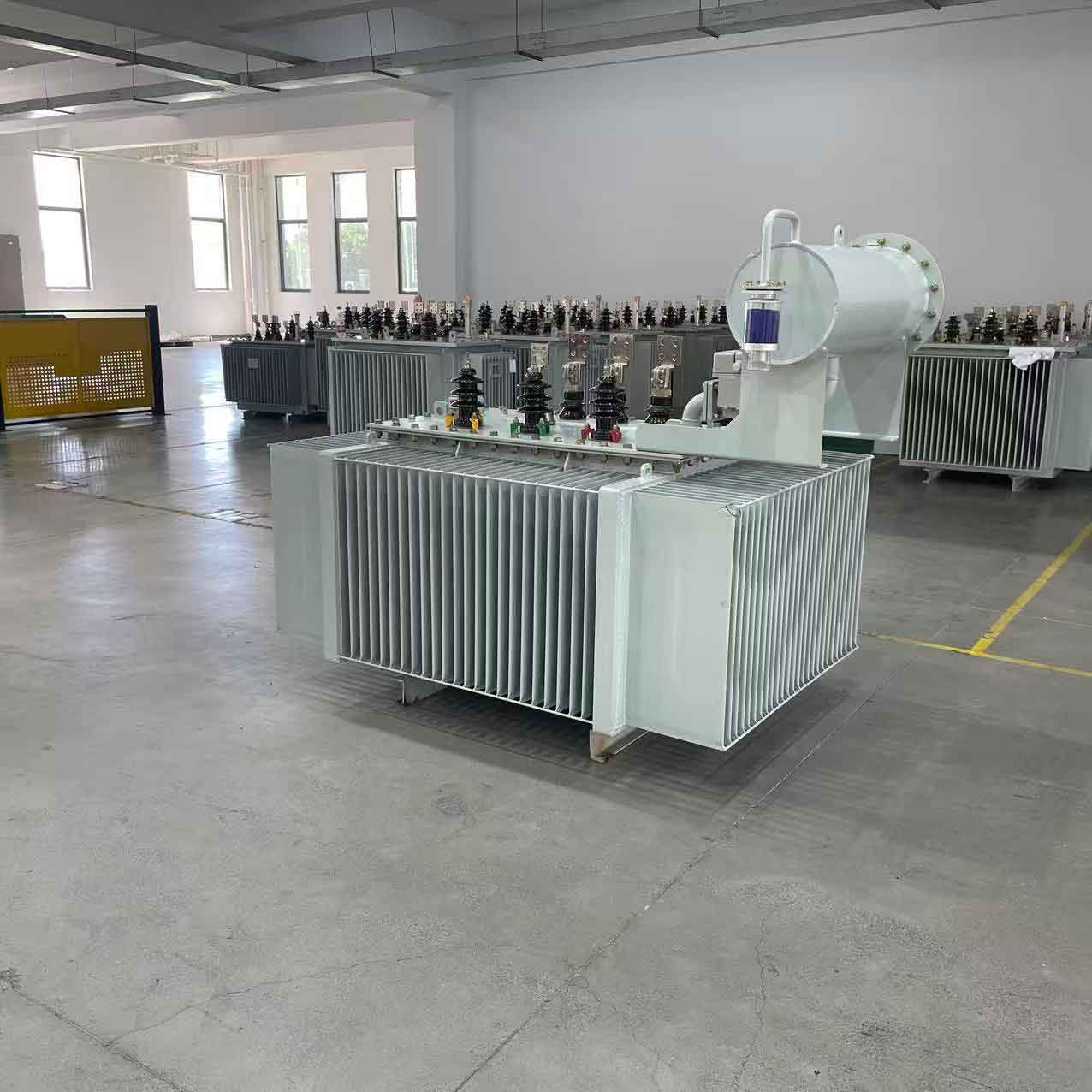
Finished oil-immersed distribution transformers awaiting dispatch.
6. Environment and 5S as a Quality Enabler
Insulation, cores, and coils are sensitive to humidity and dust. The shop runs HVAC to hold humidity under 60% so insulation does not absorb moisture; core and winding areas have dust extraction so metallic dust cannot accumulate; we zone material, work-in-progress, and quarantine areas and run 5S so tools and parts stay put and no copper shavings or debris end up inside a unit. Daily cleaning checks are part of the IPQC routine; if the environment fails, the related operation pauses. This takes a whole class of hidden defects off the table before they start.
Conclusion
A transformer plant’s quality system is a closed loop running from raw material through production, testing, and after-sales — and its logic is prevention first, inspection second, continuous improvement. Standardized management sets the base; IQC cuts bad material at the source; IPQC catches defects in real time; FQC and OQC hold the gate at shipment; and traceability, nonconformance handling, supplier management, training, and environment cover the rest. Together they drive down the classic failures — inter-turn short, excess losses, oil leak, partial discharge over limit, dielectric breakdown. Power equipment is grid safety. Only by pushing quality control into every process, every operator, and every test instrument can a plant reliably turn out transformers that meet the standard and the customer — lower after-sales cost, stronger reputation, and a real market edge.
WeChat
Scan the QR Code with wechat