 Jiangsu Shendian Electric Co., Ltd.
Краткий ответ
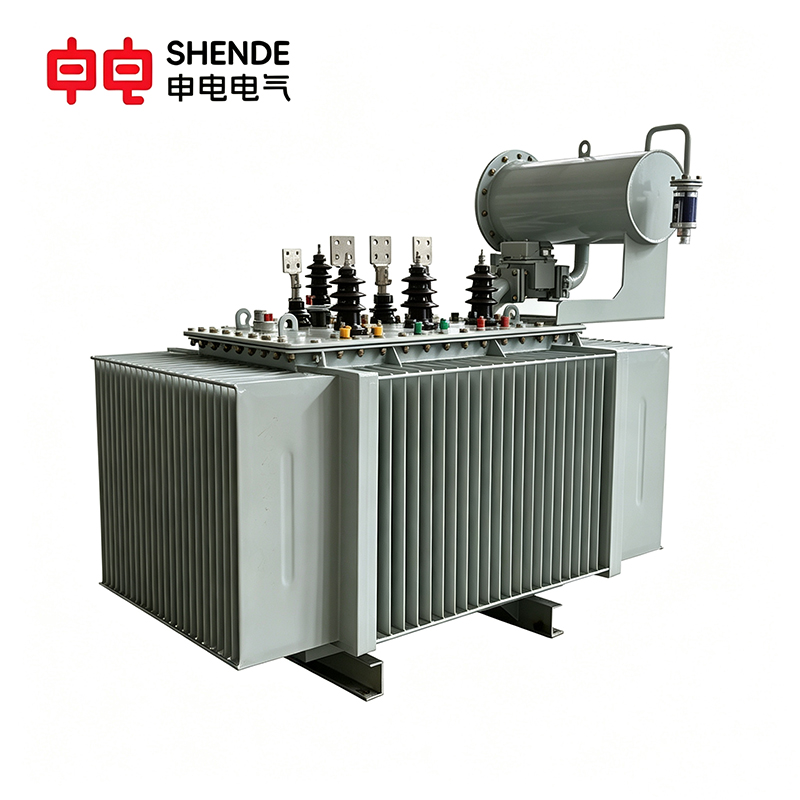
Трехфазный маслонаполненный трансформатор мощностью 1250 кВА (11 кВ) — это герметичное распределительное устройство с медными обмотками, предназначенное для промышленных цехов и производственных предприятий. Оно понижает входное напряжение 11 кВ до 400 В для питания центров управления электродвигателями, производственных линий с частотно-регулируемыми приводами (ЧРП), сварочных постов, компрессорного оборудования и систем освещения. На предприятиях с многосменным режимом работы предпочтение отдается именно маслонаполненным герметичным трансформаторам, а не сухим аналогам. Это обусловлено тем, что масло эффективно поглощает пусковые токи (превышающие номинальные в 6–8 раз) при прямом пуске двигателей и выдерживает длительные высокие нагрузки в условиях непрерывного производства. Кроме того, такие трансформаторы примерно на 10–15% дешевле в пересчете на 1 кВА, а благодаря герметичному гофрированному баку они не требуют периодического обслуживания масла в течение всего расчетного срока службы (25 лет). Для объектов с преобладанием нагрузок от частотно-регулируемых приводов и сварочного оборудования рекомендуется выбирать исполнение с обмотками, рассчитанными на определенный К-фактор (K-factor), и схемой соединения обмоток Dyn11.
Обзор продукции
Данное изделие представляет собой трехфазный маслонаполненный распределительный трансформатор (50/60 Гц) мощностью 1250 кВА с первичным напряжением 11 кВ и вторичным напряжением 0,4 кВ (по запросу возможно исполнение на 0,415 кВ или 0,433 кВ). Обмотки высокого и низкого напряжения выполнены из меди. Активная часть размещена в герметичном стальном баке с гофрированными стенками (без расширительного бака), что исключает контакт изоляционного масла с воздухом. Благодаря этому масло не нуждается в отборе проб, фильтрации или доливке, что делает трансформатор полностью необслуживаемым на протяжении всего 25-летнего срока эксплуатации.
Трансформатор разработан для предприятий с многосменным циклом работы: цехов с оборудованием с ЧПУ, заводов по производству автокомпонентов, предприятий пищевой промышленности, цехов литья пластмасс, текстильных фабрик, а также промышленных парков, получающих электроэнергию по сети 11 кВ. В стандартную комплектацию входит система контроля температуры масла и интерфейс RS485/Modbus RTU. Опционально доступна установка модуля передачи данных (DTU) с поддержкой 4G или LoRa, что позволяет передавать информацию о температуре обмоток и масла, токе нагрузки и напряжении непосредственно в систему диспетчеризации (SCADA) предприятия или систему энергоменеджмента (в соответствии со стандартом ISO 50001). Произведено в соответствии со стандартом ISO 9001; проектирование и испытания выполнены согласно стандартам IEC 60076-1/-2/-3/-5/-10, GB 1094 и GB 20052-2024.
Почему для промышленных предприятий предпочтительны герметичные маслонаполненные трансформаторы, а не сухие
Наша рекомендация: для установки на открытой площадке рядом с цехом, в отдельной заводской подстанции или в распределительном помещении промышленного парка следует выбирать герметичные маслонаполненные трансформаторы. Сухие трансформаторы с литой изоляцией лучше оставить для внутренних электрощитовых, размещения на антресолях или любых других зон, где действующие нормы пожарной безопасности запрещают использование горючего масла.
Причина кроется в режиме эксплуатации. На промышленных предприятиях запуск мощных электродвигателей часто осуществляется прямым пуском, что сопровождается броском тока, в 6–8 раз превышающим номинальный, в течение нескольких секунд. Кроме того, оборудование зачастую работает в непрерывном режиме в две или три смены. Масло обладает значительно большей теплоемкостью, чем воздух (постоянная времени нагрева для трансформатора мощностью 1250 кВА исчисляется десятками минут), поэтому бак эффективно поглощает тепловые нагрузки при пуске двигателей и пиковых нагрузках в течение смены, не допуская критического перегрева обмоток. Кроме того, использование герметичного бака позволяет исключить статью эксплуатационных расходов (OPEX), которую часто упускают из виду при планировании бюджета: отпадает необходимость в ежегодном отборе проб масла, его фильтрации, а также в замене осушителей (силикагеля) в расширительном баке.
| Критерий | Герметичный масляный (данный продукт) | Сухой с литой смолой | Влияние на площадку завода |
| Монтаж | Открытая площадка рядом с цехом | Внутреннее распределительное помещение, антресоль | Обычно определяются площадью и компоновкой |
| Пожарная безопасность и масло | Горючее масло — требуется поддон или план локализации разливов согласно местным нормам | Самозатухающий, без масла | Внутреннее высокое помещение или подвал → сухой тип |
| Пуск двигателей и импульсные нагрузки | Отлично — тепловая масса масла поглощает пусковой ток при прямом пуске (DOL) и пики нагрузки | Меньшая перегрузочная способность, быстрее растёт температура горячей точки | Предприятия с крупными двигателями предпочитают масляные |
| Техническое обслуживание | Не требуется — герметичный, отбор проб масла не производится | Не требуется | Герметичное масло устраняет повторяющуюся статью операционных расходов |
| Стоимость на 1 кВА | Самая низкая | Обычно на 10–15 % выше | Масляный выигрывает при расширении с ограниченным CAPEX |
| Гармоники (ЧРП, сварка) | Доступна конструкция обмотки K-9 / K-13 | Конструкции с K-фактором — стандарт | Оба варианта можно задать — указывайте это явно |
| Шум | ≤ 58 дБ(А), низкошумное исполнение ≤ 52 дБ(А) | Немного тише | Офисы, примыкающие к цеху → укажите предел дБ |
Классы энергоэффективности и эксплуатационные расходы за 20 лет
Трансформатор мощностью 1250 кВА на предприятии, работающем в две смены, остается под напряжением круглосуточно — а значит, потери холостого хода возникают на протяжении всех 8760 часов в году, даже в нерабочие смены. Именно поэтому выбранный вами класс энергоэффективности имеет большее значение, чем цена самого оборудования.
| Класс по GB 20052-2024 | Модель | Потери холостого хода P0 | Потери короткого замыкания Pk (75 °C) | Годовые потери (кВт·ч) | Стоимость электроэнергии за 20 лет |
| Класс 3 | S13-M-1250/11 | 970 Вт | 12 000 Вт | ≈ 46 300 кВт·ч | ≈ 111 200 долл. США |
| Класс 2 | S20-M-1250/11 | 870 Вт | 9 600 Вт | ≈ 37 900 кВт·ч | ≈ 91 000 долл. США |
| Класс 1 | S22-M-1250/11 | 780 Вт | 8 640 Вт | ≈ 34 100 кВт·ч | ≈ 81 800 долл. США |
Key Features
- Hermetically sealed corrugated tank — no conservator, the oil never contacts air. No oil sampling, filtration or topping-up for the whole 25-year design life; this removes the OPEX item most factory maintenance teams forget to budget.
- Built for motor-starting and multi-shift duty — ONAN cooling with high oil thermal mass absorbs DOL motor inrush (6–8× rated current for several seconds) and sustained two-shift loads without winding hot-spot excursions.
- Harmonic-capable winding design — K-4 for mixed motor and lighting boards, K-9 or K-13 for workshops dominated by VFD drives, welders and servo systems whose total harmonic current distortion commonly exceeds 15% and would otherwise overheat a standard transformer.
- Dyn11 vector group as standard — traps zero-sequence and 3rd-order harmonics inside the delta winding so they do not travel upstream into the 11 kV plant feeder or neighbouring lines; the star LV side provides a neutral for single-phase site loads.
- Copper windings on both HV and LV — lower load loss, lower temperature rise and better short-circuit withstand than aluminium, verified by type test to IEC 60076-5.
- Class 1 or Class 2 efficiency available — S22 (780 W / 8,640 W) or S20 (870 W / 9,600 W) per GB 20052-2024 at 1250 kVA; the Class 1 build cuts no-load loss a further 10% over Class 2 across 20 years of two-shift duty.
- Outdoor-ready construction — fluororubber gasket sealing proven from -25 °C to +55 °C, optional C4 / C5-M coating for coastal plants and chemical environments, IP54 cable boxes, anti-theft locks and vandal-resistant hardware.
- Smart-ready for the plant backbone — oil and winding temperature, load current and voltage via RS485/Modbus RTU, with optional 4G or LoRa DTU feeding the plant SCADA, MES or energy management system (ISO 50001 monitoring).
- Low noise — ≤ 58 dB(A) at 1 m as standard, with a low-noise core and clamping design available at ≤ 52 dB(A) for workshops with attached offices or adjacent production areas.
Typical Applications
- CNC machining shops and general fabrication workshops
- Automotive components and assembly plants
- Food and beverage processing and cold-chain facilities
- Plastic injection moulding plants and textile mills
- Steel service centres and heavy fabrication bays with welding loads
- Industrial parks and multi-tenant factory substations fed at 11 kV
- Compact substation (YBM) for turnkey factory power-room delivery
Standards and Certifications
Designed and tested in accordance with IEC 60076-1 (general), IEC 60076-2 (temperature rise), IEC 60076-3 (insulation levels and dielectric tests), IEC 60076-5 (short-circuit withstand) and IEC 60076-10 (sound level), plus GB 1094 series and GB/T 6451. Energy performance meets GB 20052-2024 Class 2 as standard and Class 1 with the S22 design — an 11 kV unit is certified against the same 10 kV class tables, since GB 20052 covers the 6/10 kV distribution classes. Manufactured under ISO 9001, ISO 14001 and ISO 45001. CE conformity available; third-party type test reports (CNAS-accredited laboratory, KEMA or equivalent) available on request. Harmonic duty designed with reference to IEEE C57.110 and IEEE 519.
WeChat
Scan the QR Code with wechat