 Jiangsu Shendian Electric Co., Ltd.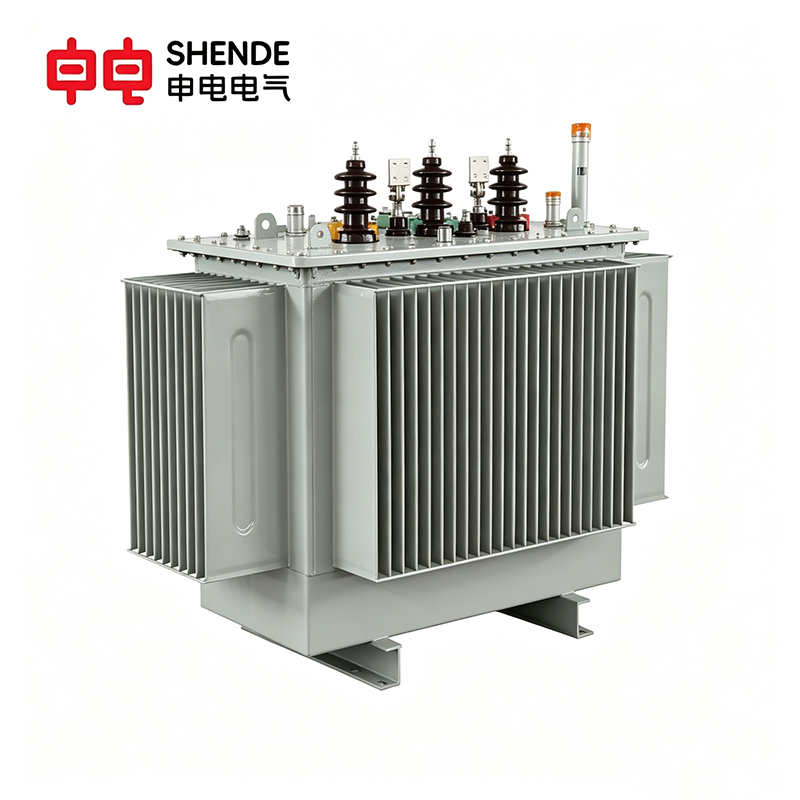
Quick Answer
A 100 kVA 10 kV three-phase oil-immersed transformer for an EV charging station is a hermetically sealed, copper-wound distribution transformer that steps 10 kV medium voltage down to 400 V to feed DC fast chargers, AC chargers, canopy lighting and site services. Charging sites choose sealed oil-immersed units over dry type for outdoor hubs because the corrugated sealed tank removes the conservator and every periodic oil maintenance task, absorbs the thermal cycling of pulsed charging loads, and costs roughly 10–15% less per kVA than cast resin. For DC fast charging, specify a K-9 or K-13 rated design and Dyn11 vector group.
Product Overview
This is a three-phase, 50/60 Hz oil-immersed distribution transformer rated 100 kVA with a primary voltage of 10 kV and a secondary voltage of 0.4 kV (415 V or 480 V on request). Both HV and LV windings are copper. The active part is sealed inside a corrugated-fin steel tank with no conservator, so the insulating oil never contacts air, never needs sampling, filtration or topping-up, and the unit is genuinely maintenance-free for its design life of 25 years.
It is built for smart EV charging sites: highway charging plazas, fleet and bus depots, workplace and destination charging at malls and hotels, and PV-plus-storage charging hubs. The standard supply includes oil-temperature monitoring and an RS485/Modbus RTU interface, with an optional 4G or LoRa DTU so winding and oil temperature, load current and voltage can be read directly by the charging management platform (OCPP backend) or the site SCADA. Manufactured under ISO 9001 and designed and tested to IEC 60076-1/-2/-3/-5/-10, GB 1094 and GB 20052-2024.
Why EV Charging Stations Choose Sealed Oil-Immersed Over Dry Type
Our recommendation: for an outdoor charging hub, fleet depot or motorway service area, specify a hermetically sealed oil-immersed transformer. Reserve cast resin dry type for indoor electrical rooms, underground parking and any location where the local fire code rules out combustible oil.
The reason is duty cycle. Chargers do not draw steady current — a DC fast charger pulls hard for 10 to 30 minutes then drops away. Oil has far greater thermal mass than air, with a thermal time constant of roughly 15–25 minutes on a 100 kVA unit, so the tank absorbs each charging peak without driving the winding hot spot up. A sealed tank also removes the OPEX item most charging operators forget to budget: no annual oil sampling, no filtration, no conservator breathers to replace.
| Consideration | Sealed Oil-Immersed (this product) | Cast Resin Dry Type | Charging-Site Impact |
| Installation | Outdoor compound, fenced or walled | Indoor room, underground garage | Fire code usually decides it, not engineering preference |
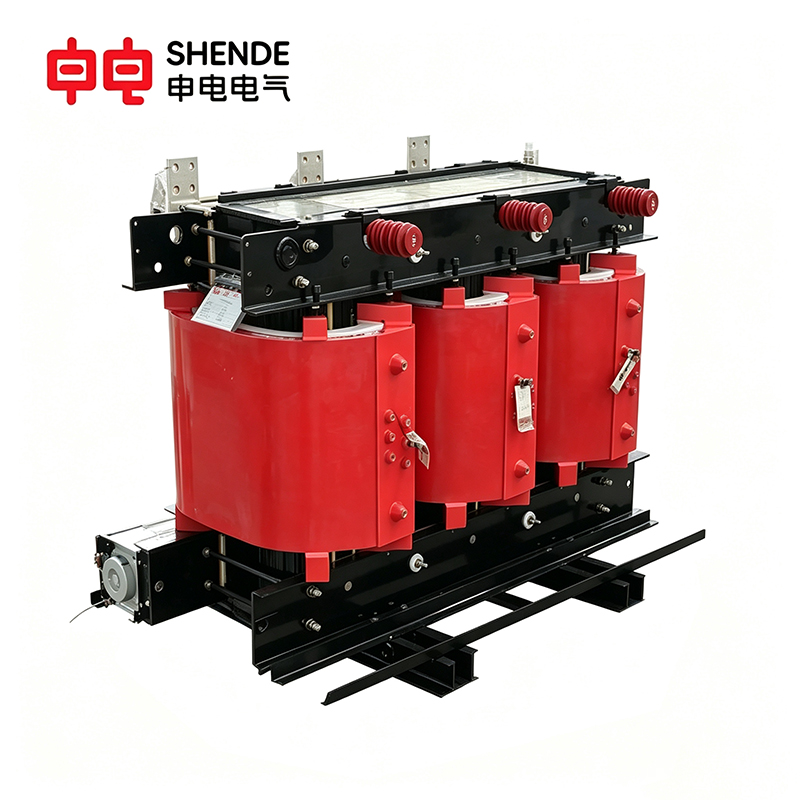
| Fire and oil | Combustible oil — needs bund or spill plan per local code | Self-extinguishing, no oil | Indoor or underground → dry type |
| Pulsed load | Excellent — oil thermal mass absorbs 10–30 min peaks | Lower overload tolerance, faster hot-spot rise | DCFC peaks favour oil |
| Maintenance | None — sealed, no oil sampling ever | None | Sealed oil removes a recurring OPEX line |
| Cost per kVA | Lowest | Typically 10–15% higher | Oil wins capex-sensitive sites |
| Harmonics | K-9 / K-13 winding design available | K-rated designs standard | Both can be specified — state it explicitly |
| Noise | ≤ 55 dB(A), low-noise build ≤ 50 dB(A) | Slightly quieter | Near retail, hotels and offices specify a dB limit |
Energy Efficiency Grades and 20-Year Running Cost
A 100 kVA transformer at a charging site stays energised 24 hours a day, so no-load loss runs 8,760 hours a year even when no car is charging. That is why the grade you specify matters more than the purchase price.
| GB 20052-2024 Grade | Model | No-load loss P0 | Load loss Pk (75 °C) | Annual loss (kWh) | 20-year electricity cost |
| Class 3 | S13-M-100/10 | 150 W | 1,580 W | ≈ 3,010 kWh | ≈ USD 7,220 |
| Class 2 | S20-M-100/10 | 135 W | 1,265 W | ≈ 2,540 kWh | ≈ USD 6,100 |
| Class 1 | S22-M-100/10 | 120 W | 1,140 W | ≈ 2,275 kWh | ≈ USD 5,460 |
Key Features
- Hermetically sealed corrugated tank — no conservator, the oil never contacts air. No oil sampling, filtration or topping-up for the whole 25-year design life; this removes the OPEX item most charging operators forget to budget.
- Built for pulsed charging duty — ONAN cooling with high oil thermal mass (time constant roughly 15–25 minutes) absorbs 10–30 minute DC fast-charging peaks without winding hot-spot excursions.
- Harmonic-capable winding design — K-4 for AC Level 2 clusters, K-9 or K-13 for DC fast chargers whose total harmonic current distortion commonly exceeds 15% and would otherwise overheat a standard transformer.
- Dyn11 vector group as standard — traps zero-sequence and 3rd-order harmonics inside the delta winding so they do not travel upstream into the utility feeder or other site loads.
- Copper windings on both HV and LV — lower load loss, lower temperature rise and better short-circuit withstand than aluminium, verified by type test to IEC 60076-5.
- Class 1 or Class 2 efficiency available — S22 (120 W / 1,140 W) or S20 (135 W / 1,265 W) per GB 20052-2024; Chinese Tier 1 limits at 100 kVA are already about 8% tighter than EU Regulation 548/2014.
- Outdoor-ready construction — fluororubber gasket sealing proven from -25 °C to +55 °C, optional C4 / C5-M coating for roadside de-icing salt and coastal sites, IP54 cable boxes, anti-theft locks and vandal-resistant hardware.
- Smart-ready for the charging backend — oil and winding temperature, load current and voltage via RS485/Modbus RTU, with optional 4G or LoRa DTU feeding the OCPP charging management platform or site SCADA.
- Low noise — ≤ 55 dB(A) at 1 m as standard, with a low-noise core and clamping design available at ≤ 50 dB(A) for sites adjacent to retail, hotels and offices.
Typical Applications
- Highway fast-charging plazas and motorway service areas
- Fleet depots, bus and logistics charging yards
- Workplace and destination charging at retail malls, hotels and offices
- Public parking structures and surface car parks
- PV + battery + charging integrated sites
- Residential community charging clusters fed from a 10 kV distribution room
- Compact substation (YBW-12) for turnkey charging station delivery
Standards and Certifications
Designed and tested in accordance with IEC 60076-1 (general), IEC 60076-2 (temperature rise), IEC 60076-3 (insulation levels and dielectric tests), IEC 60076-5 (short-circuit withstand) and IEC 60076-10 (sound level), plus GB 1094 series and GB/T 6451. Energy performance meets GB 20052-2024 Class 2 as standard and Class 1 with the S22 design. Manufactured under ISO 9001, ISO 14001 and ISO 45001. CE conformity available; third-party type test reports (CNAS-accredited laboratory, KEMA or equivalent) available on request. Harmonic duty designed with reference to IEEE C57.110 and IEEE 519.
WeChat
Scan the QR Code with wechat