 Jiangsu Shendian Electric Co., Ltd.
Introduction: A Quiet Shift on the World’s Most Professional Fleet
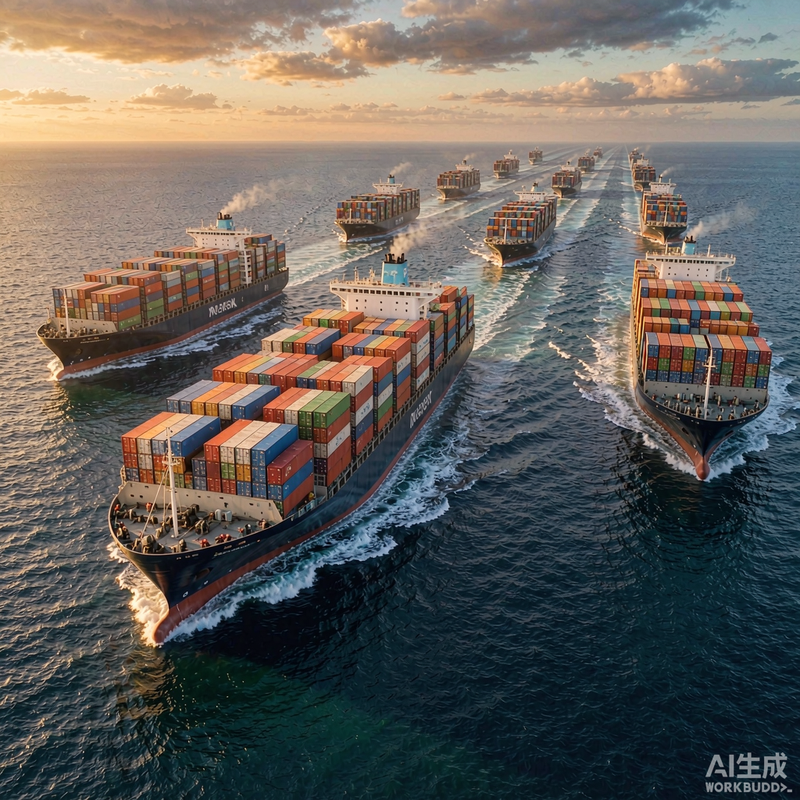
Denmark operates one of the most sophisticated merchant fleets in the world – Maersk alone moves roughly a sixth of global seaborne container trade – and Danish owners are under a double pressure that few markets face so sharply: IMO decarbonisation timelines on one side, and fleet renewal for AI-era logistics on the other. Every new hybrid, battery-ready or methanol-fuelled vessel adds a quieter question to the shipyard schedule: who will supply the transformers that keep power flowing between the generator, the switchboard and the new electric propulsion chain?
For decades the default answer was a European nameplate. That answer is no longer automatic – and this article examines why the question is now being asked, what Danish buyers actually test before approving a marine transformer supplier, and where Chinese manufacturers genuinely fit into the picture.
1. What Makes Denmark’s Market Different?
Denmark is not a large domestic market, but it is a high-standard one, and its influence is global because Danish-owned vessels trade worldwide:
- Global fleets, Danish standards. Danish shipowners register and refit vessels under international class rules, so any supplier approved in Denmark effectively gains a reference for the entire Northern European market.
- Green shipping leadership. LNG, methanol, hybrid battery and shore-power-ready designs are no longer pilot projects – they are standard in newbuild programs, and each of them reshapes the electrical system.
- Port and service infrastructure. Copenhagen, Aarhus and Aalborg anchor a service network that expects documentation, spares and response times at European levels.
- Procurement discipline. Danish technical teams typically evaluate suppliers through structured audits rather than price-first negotiations – a process that rewards manufacturers who can evidence their systems, not just their products.
2. What Do Shipboard Transformers Actually Do on a Modern Vessel?
A marine transformer is not a land-based unit with a paint job. The marine environment stacks up demands that few applications combine: continuous load fluctuation, salt-humid air, 24/7 operation, limited switchboard room, and classification requirements that treat failure as a safety event, not a maintenance event. Four functions matter most:
- Voltage conversion between generation level (commonly 6.6 kV or 11 kV on larger tonnage) and the 400/440 V auxiliary network – and increasingly toward 690 V and 800 V DC buses on hybrid designs.
- Galvanic isolation that protects navigation, comms and automation circuits from disturbances propagating through the power train.
- Harmonic and load-mix tolerance, because thruster drives, converters and battery inverters distort the current waveform far beyond harbour-load profiles.
- Structural resilience: anti-vibration mounting, marine-grade anti-corrosion finishes, and insulation systems qualified for high ambient temperature and tilt conditions.
3. How Do Danish Buyers Actually Evaluate a Transformer Supplier?
Conversations with European procurement teams converge on the same short list of gates. Each gate is evidentiary – a claim without paperwork does not pass:
| Evaluation Gate | What the Buyer Expects to See | Reference Framework |
|---|---|---|
| Type and class approval | Type test reports, class society certificate for marine service | IEC 60076 series, IEEE C57, DNV / Lloyd’s Register rules |
| Design robustness | Short-circuit withstand evidence, temperature-rise test data, load-loss values | IEC 60076-5, class inspection during FAT |
| Marine adaptation | Anti-vibration design, corrosion protection, insulation system for high ambient and tilt | Marine classification environmental requirements |
| Manufacturing system | ISO-certified quality system, traceable materials, routine test records per unit | ISO 9001 / 14001 / 45001 |
| Delivery and lifecycle | Documented lead time, FAT attendance, spares strategy, warranty terms | Project contract milestones, service agreement |
The pattern is clear: Danish buyers do not ask ‘where is the factory’ first – they ask ‘can the factory prove its process’. Manufacturers who arrive with complete type-test files and routine-test documentation per unit move through this gate structure far faster than those who lead with price.
4. Where Do Chinese Manufacturers Genuinely Fit In?
The credible opportunity is not ‘cheaper boxes’ – it is capacity and responsiveness applied to a compliant product:
- Engineering depth: established Chinese marine-transformer lines cover 6-35 kV classes in both cast-resin and oil-immersed designs, with routine testing to IEC and class-rule requirements.
- Export familiarity: leading plants already work with FAT attendance, third-party witness testing (DNV, TUV, BV) and full technical dossier preparation as standard deliverables.
- Schedule leverage: multi-line capacity shortens lead times and absorbs mid-project design changes – a real advantage when yard slots, not component cost, drive the critical path.
- Lifecycle economics: low-loss designs reduce fuel-linked operating cost over a 25-year service life, which is the number Danish owners actually discount, not the invoice.
A fair comparison against incumbent European suppliers now looks less like a price gap and more like a capability overlap, with the remaining differences concentrated in brand history and local service footprint:
| Dimension | Established European Suppliers | Qualified Chinese Manufacturers |
|---|---|---|
| Class & standard compliance | Proven, default acceptance | Achievable with complete test documentation; increasingly common |
| Delivery lead time | Often 9-14 months, constrained order books | Typically shorter; multi-line scheduling flexibility |
| Engineering customization | Strong, but at premium engineering fees | Strong on standard marine adaptations; lower change-order cost |
| Unit pricing | Benchmark level | Usually 20-40% lower at comparable specification |
| Local service network | Dense in Northern Europe | Building up; spares-by-air and remote support as interim model |
| Procurement risk | Low, familiar process | Managed through FAT, third-party inspection and staged payments |
5. How Is Green Shipping Changing the Transformer Itself?
Decarbonisation is not only changing how many transformers a vessel needs – it is changing what the transformer must be:
- Hybrid and battery vessels: transformers must integrate with bidirectional converters and tolerate converter-generated harmonics; K-factor or derating awareness becomes a specification item, not an afterthought.
- Fully electric and shore-power-ready tonnage: energy conversion efficiency directly extends operational range and cuts shore-side energy cost.
- Methanol and LNG fuelling: separation between fuel-system power and main networks pushes demand toward isolation designs with enhanced insulation coordination.
- Wind-assisted propulsion: auxiliary generation profiles become intermittent, requiring transformers stable under wider voltage and frequency excursions.
The common thread: on the vessels Denmark is ordering now, the transformer sits closer to the propulsion decision than it ever did – which is exactly why supplier selection is being revisited.
6. What Does Good Procurement Risk Control Look Like?
Danish-style risk control is procedural, and compliant Chinese manufacturers fit into it without special treatment:
- Technical clarification round: voltage class, power, installation footprint, cooling, vibration and tilt requirements fixed in writing before quotation.
- Third-party inspection: FAT witnessed by the class society or an independent inspector (DNV, TUV, BV).
- Staged payments tied to milestones: material release, routine test pass, FAT pass, shipment.
- After-sales agreement: spares availability, remote technical support, defined warranty response.
7. A Representative Case Pattern
A typical recent engagement between a Chinese marine-transformer plant and a European owner followed this arc: 10-35 kV shipboard units specified for an ocean-going cargo series; type-test dossier and per-unit routine records delivered in advance of FAT; FAT witnessed by a third-party inspector without a single major non-conformance; delivery aligned to the yard’s engine-room schedule; and smart-monitoring terminals pre-integrated so the owner’s fleet platform could read temperature and load data from day one. The outcome that mattered most to the owner was not the unit price – it was zero schedule impact on the yard.
8. Conclusion: The Question Is No Longer ‘If’ but ‘How Well’
Danish shipping will keep setting the standard for green, digitalised tonnage, and its electrical architecture will keep rising in importance. The transformer supply question has moved from geography to evidence: certification files, test documentation, schedule reliability and lifecycle support. Manufacturers – Chinese and European alike – who can prove those four things will win the next round of fleet programs.
FAQ
Why are Danish shipowners rethinking where their shipboard transformers come from?
Because the transformer now sits closer to the propulsion decision than it ever did. Hybrid, methanol and shore-power-ready vessels reshape the electrical system, so buyer selection has shifted from geography to evidence: certification files, test documentation, schedule reliability and lifecycle support. Chinese manufacturers that can prove all four now pass European qualification gates.
What does a marine transformer do on a modern vessel?
It steps generation voltage (commonly 6.6 kV or 11 kV) down to the 400/440 V auxiliary network, provides galvanic isolation for navigation and automation circuits, tolerates converter-generated harmonics from thrusters and battery inverters, and withstands vibration, salt-humid air, tilt and 24/7 duty under class rules.
How do Danish buyers evaluate a marine transformer supplier?
Through evidentiary gates, not price-first negotiation: type-test reports and class society certificates (IEC 60076, DNV / Lloyd’s Register), short-circuit and temperature-rise data, marine anti-vibration and corrosion design, an ISO-certified quality system with per-unit routine test records, and documented lead time with FAT attendance and spares strategy.
How is green shipping changing marine transformer design?
Battery-hybrid vessels need units that tolerate bidirectional converter harmonics (K-factor awareness becomes a spec item); shore-power-ready tonnage rewards higher conversion efficiency; methanol and LNG fuelling push demand toward isolation designs with enhanced insulation coordination between fuel-system power and main networks.
How can a Chinese manufacturer qualify as a marine transformer supplier?
By matching the standard European procurement process: fix voltage class, power, cooling, vibration and tilt requirements in writing before quotation; offer FAT witnessed by DNV, TUV or BV; accept milestone-based staged payments; and commit to spares availability and defined warranty response. Complete type-test files move a supplier through qualification faster than a low price.
About SHENDIAN Electric
SHENDIAN Electric (Jiangsu, China) manufactures oil-immersed and cast-resin dry-type transformers from 10 kV to 110 kV classes, with group transformer manufacturing experience since 2007 and export programs across Europe, North America and Asia. For marine and offshore inquiries, we provide: technical clarification and consultation, marine-adapted design, full FAT and third-party inspection documentation, project-oriented delivery, and long-term after-sales support.
Contact: Allan Yan | Overseas Sales Manager | allan@cnbcsd.com | www.cnbcsd.com
Email us for technical datasheets, marine reference projects or quotation support.
WeChat
Scan the QR Code with wechat