 Jiangsu Shendian Electric Co., Ltd.
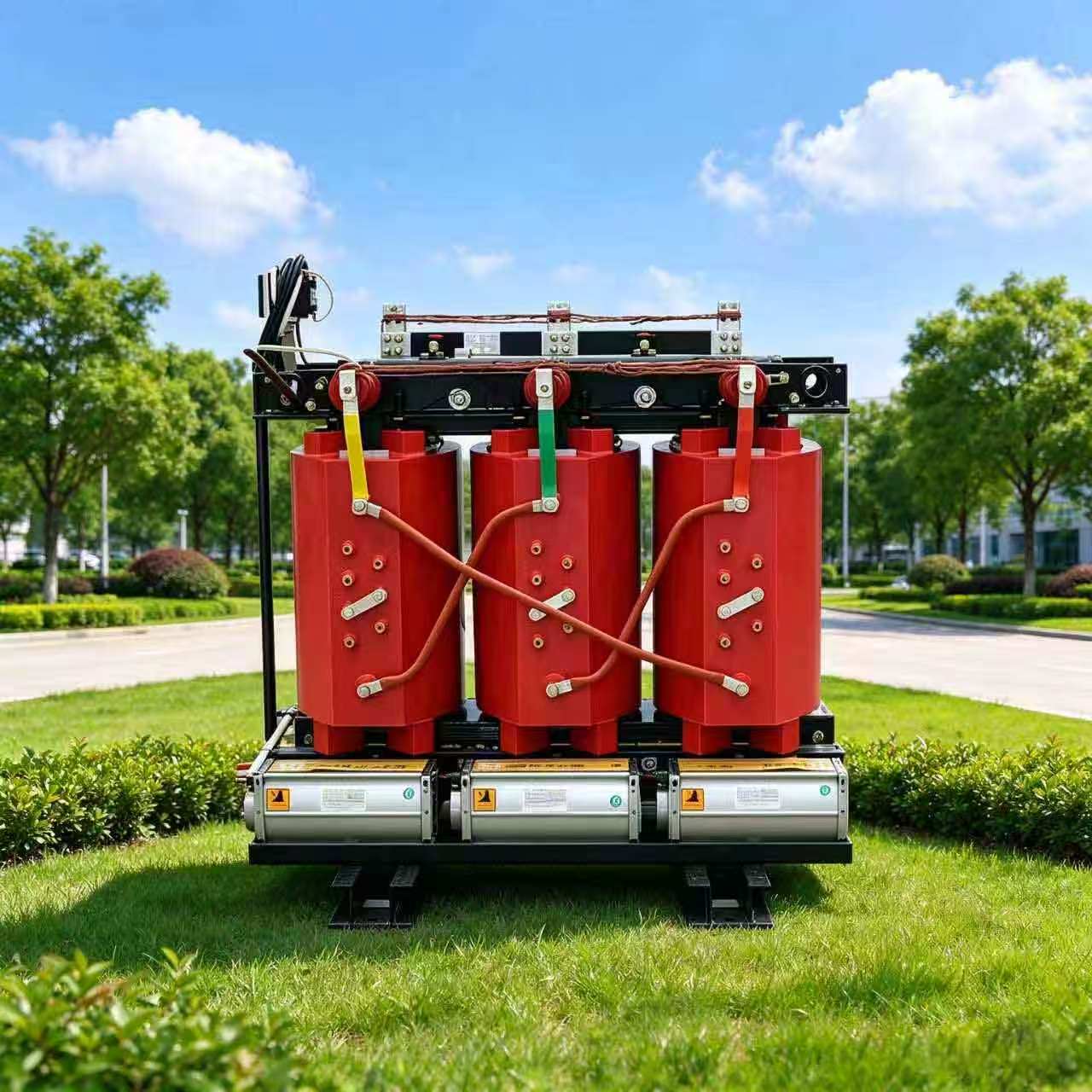
Yes, but not as they come off the line. A dry-type transformer is designed for indoor service: it cools by moving air, and with no oil there is nothing to seal moisture out or to smooth out temperature swings. Leave a standard unit outside and the insulation ages faster, moisture condenses on the windings, partial discharge follows, and service life shortens. Neither IEC 60076-11 nor IEEE C57.12.01 treats outdoor installation as a normal service condition, so the enclosure rating and the environmental classes (C1/C2 for climate, E1/E2 for condensation and pollution, under IEC 60076-11) have to be settled with the manufacturer at the enquiry stage. What actually decides the outcome on site is the enclosure, the anti-condensation heating, and the way the unit is installed.
Start with the Enclosure
Enclosure rating is where outdoor jobs are won or lost. Standard dry-type transformers are supplied in NEMA 1 housings, which are meant for indoor use and give essentially no water protection. Outdoor service starts at NEMA 3R: it sheds rain, sleet and snow, and it is not damaged by ice forming on the outside. Be clear about what 3R does not do. Under the NEMA 250 crosswalk it is roughly IP24, with no protection against windblown dust, so a site that is both wet and dusty needs more than the minimum. Coastal, marine and chemical sites call for NEMA 4X: 304 stainless steel for general coastal duty, 316 where chlorides are present.
The winding construction matters as well. Sealed or non-ventilated (TENV) designs cope with outdoor conditions better, because the windings never meet outside air. Ventilated cast-resin units are the awkward case: moisture, dust and salt reach the insulation directly, and anything that blocks the air paths takes the cooling capacity with it. If a ventilated unit has to go outdoors, specify weather shields over every ventilation opening and treat IP23C as the floor rather than the target.
Table 1. Outdoor Conditions and How to Deal with Them
| Environmental Factor | Typical Limit / Threshold | Required Response |
| Ambient temperature | Typically -25 °C to +40 °C for standard ratings; -40 °C designs exist | Check the nameplate range against the site climate; order an extended-range design where needed |
| Humidity / condensation | No hard limit; condensation is the main failure driver | Fit anti-condensation space heaters; specify a sealed winding system and a corrosion-resistant enclosure |
| Altitude | Standard rating up to 1 000 m (3 300 ft); derate roughly 0.3-0.5% per 100 m above that | Apply the altitude correction to the kVA rating and review dielectric clearances |
| Solar loading | Dark enclosures can sit 15 °C above ambient in direct sun | Light-coloured or reflective finish; provide shade where feasible |
| Salt / corrosives | Coastal and industrial atmospheres attack standard painted steel | NEMA 4X stainless: 304 for general coastal duty, 316 for chloride-rich sites |
Getting the Installation Right
Even a correctly rated enclosure will not rescue a bad installation, and moisture is the first thing to deal with. Anti-condensation heaters are standard equipment on outdoor units, not an extra: they run while the transformer is de-energised and hold internal surfaces above the dew point. Without them, insulation resistance can fall badly overnight in humid weather, and the unit often will not recover on its own. In the field, most outdoor moisture failures trace back to a heater that was never connected, or was isolated to save a few watts.
The rest is physical. Set the unit on a reinforced concrete pad raised 100-150 mm (4-6 in) above finished grade, with the ground falling away from the base so water cannot sit underneath. Keep the ventilation clearances: about 150 mm (6 in) to adjacent non-combustible structures, and 300-450 mm (12-18 in) above the enclosure so the cover can come off for service. Around 1.2 m (4 ft) between units or against a wall is the usual figure for working access. Every conduit entry should use a rain-tight hub or cable gland, and ventilation openings should be screened against rodents and insects.
Table 2. Enclosure Ratings and Their Outdoor Suitability
| Enclosure / Protection | Weather Protection | Typical Outdoor Use Case | Key Limitation |
| NEMA 1 / IP20 | Indoor, contact and falling-dirt protection only; no deliberate water protection | Not acceptable outdoors | Rain, sleet and condensation get in freely |
| NEMA 3R / approx. IP24 | Falling dirt, rain, sleet and snow; undamaged by external ice. No windblown-dust rating | General outdoor industrial and commercial sites; the practical minimum | Dust enters freely, and it is not corrosion-resistant for salt or chemicals |
| IP23C (minimum for ventilated cast-resin) | Protected against solid objects over 12.5 mm, water sprayed up to 60° from vertical, and contact by tools | Ventilated dry-type units in sheltered outdoor locations | Still needs anti-condensation heating and weather shields over the openings |
| NEMA 4X (304/316 SS) | Windblown dust and rain, hose-directed water, corrosion-resistant | Coastal, marine, chemical and washdown environments | Higher initial cost; confirm the stainless grade against the chloride exposure |
The Bottom Line
Dry-type transformers can be installed outdoors, but there is less room for error than with a liquid-filled unit. The twenty-year installations and the five-year ones are usually separated by four things: enclosure rating, heaters, a pad that drains, and clearances that were left clear. Ventilated cast-resin units need the most attention, and a kiosk or compact-substation enclosure is often the simpler answer than trying to weatherproof an open-ventilated machine. Get those layers right and an outdoor dry-type transformer will hold up as well as an indoor one.
WeChat
Scan the QR Code with wechat